





Parents know the pattern. A new toy arrives, the box gets opened with enormous excitement, and for a few days it is the most important object in the house. Then interest fades, and the toy slowly works its way toward the bottom of a basket.
The toys that escape this fate usually have something in common. They do not tell children exactly how to play.
That is one of the more appealing things about Tiny Land. Its collection includes kitchens, climbing sets, dollhouses, tents, walkers, easels, and other toys that leave plenty of the entertainment up to the child.
The Difference Between Watching and Doing
A toy with lights, sounds, and buttons can grab attention instantly. The problem is that once a child has discovered what every button does, there may not be much left to figure out.
Open ended toys work differently. Instead of providing the whole experience, they give children a starting point.
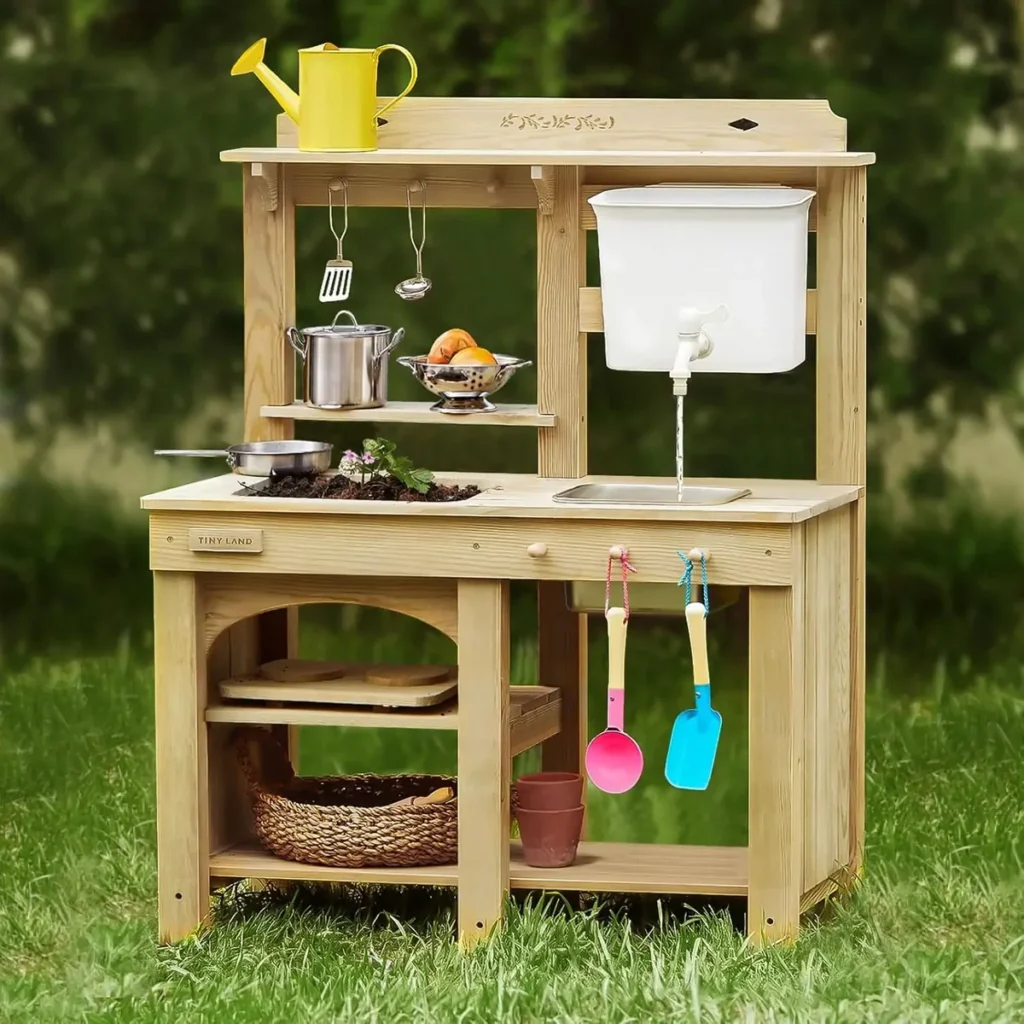
Take a play kitchen. One afternoon it is used for making imaginary pancakes. The next day it becomes a bakery. By the weekend, a sibling may have turned it into a takeaway counter.
Nothing about the toy itself had to change. The child changed the game.
This is why familiar pretend play toys can have surprisingly long lives in a playroom. Children bring new vocabulary, stories, and ideas to them as they grow.
Some Toys Grow Into New Games
What keeps children interested at two years old is rarely identical to what interests them at four. A good toy does not necessarily need to be replaced when that shift happens.
A toddler might initially enjoy moving toy food around a kitchen or opening and closing its cupboards. Later, the same kitchen can become part of much more detailed role play involving menus, customers, shopping lists, and family members.
The same principle applies to a wooden dollhouse. Younger children can simply move figures and furniture from room to room. Older kids can create characters, relationships, routines, and entire stories.
Tiny Land offers products across several age groups, so this ability to adapt fits naturally with the wider collection.
Movement Gives the Playroom Another Dimension
Not every child wants to spend an afternoon sitting at a table.
Sometimes they need to climb.
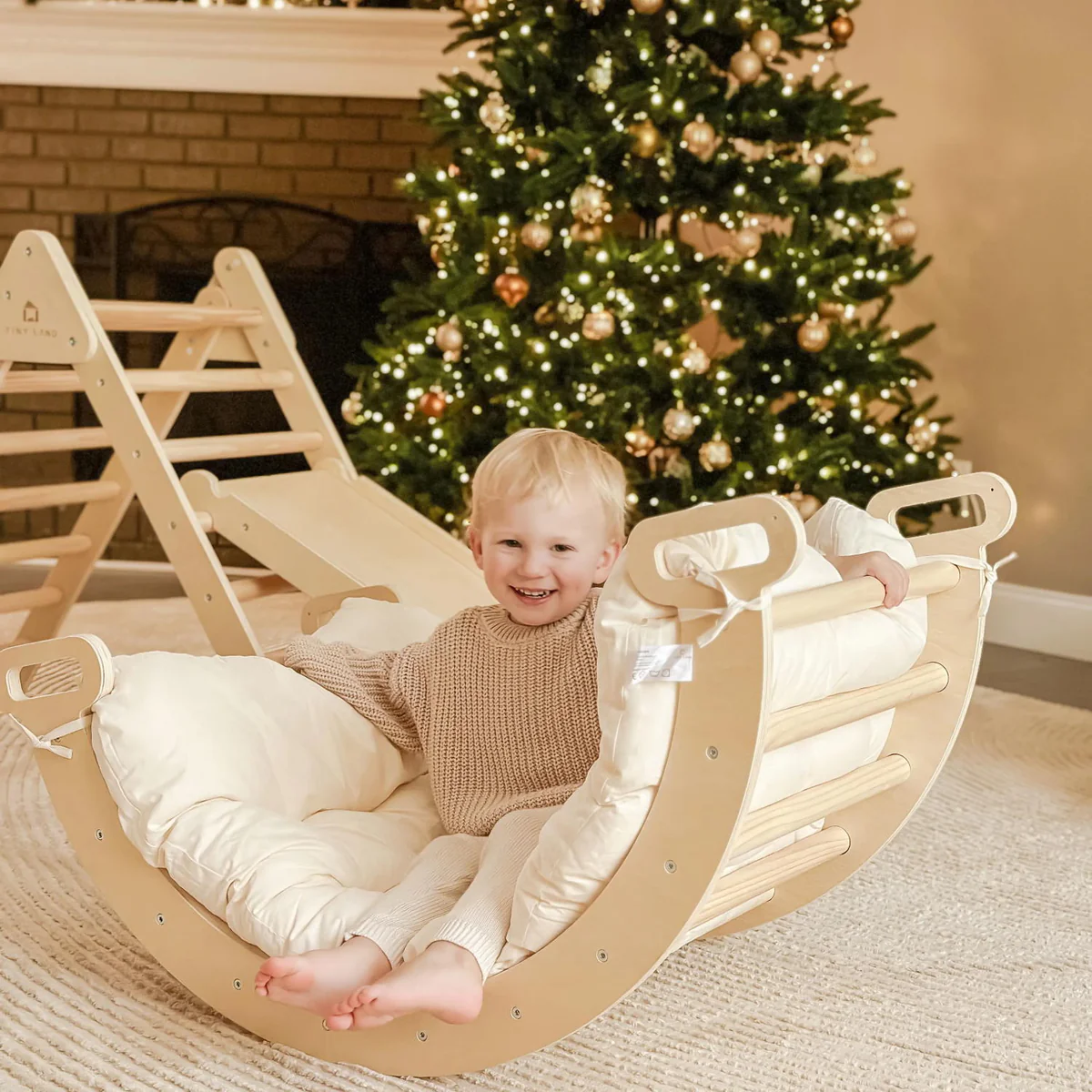
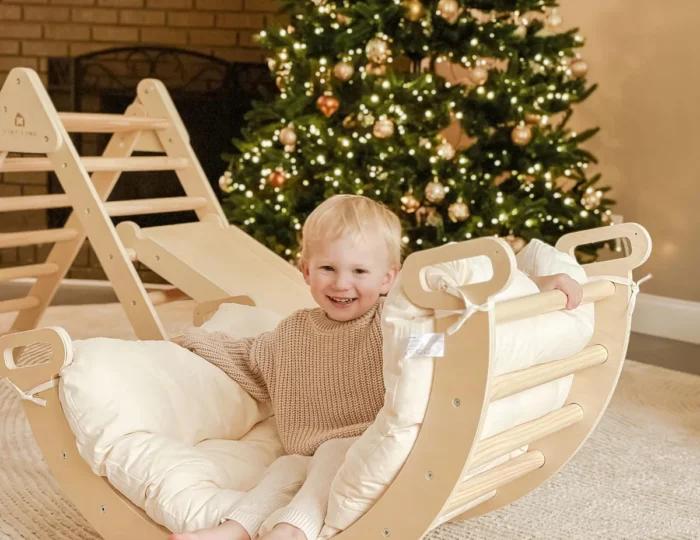
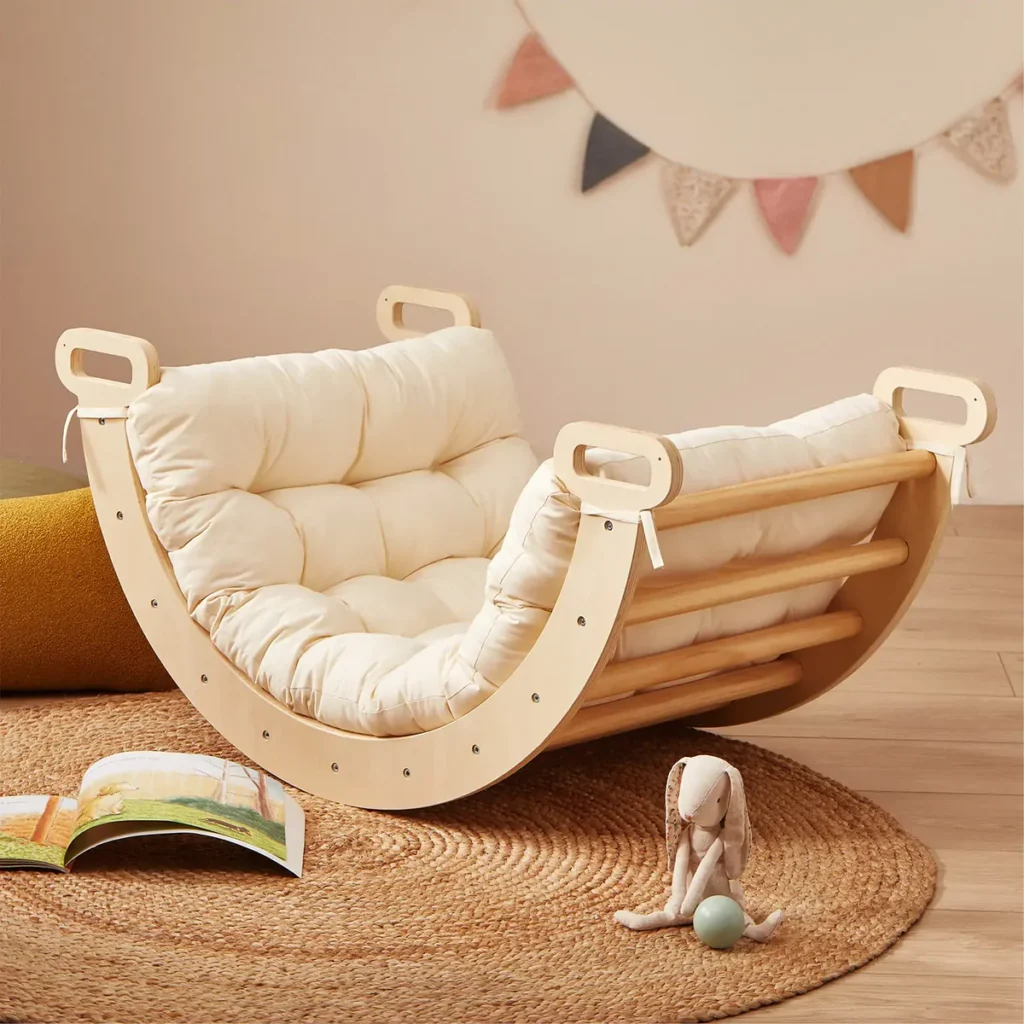
Indoor climbing toys can give energetic children somewhere appropriate to direct that impulse. Pikler-style climbing sets, foam blocks, tunnels, and similar equipment also have an advantage that is easy to overlook: children can rearrange how they use them.
A climbing structure might be a challenge one day and part of an imaginary fort the next. Foam pieces can become steps, seats, obstacles, or whatever else the game requires.
This kind of physical variety can make a playroom feel new without parents constantly bringing in new toys.
Simple Materials Leave Room for Imagination
There is a reason wooden toys continue to appeal to families despite the endless supply of electronic alternatives.
They tend to be straightforward.
A wooden train does not need to announce what it is doing. A piece of play food does not need to make a sound. A child provides the voice, movement, and story.
That simplicity also works well with Montessori play, where hands-on exploration and active participation matter more than passive entertainment.
Tiny Land uses this approach across many parts of its range, including activity toys, kitchens, climbing equipment, and toys for younger children.
Fewer Rules Can Mean More Play
Parents cannot predict which toy will become a child’s favorite. Sometimes it is the expensive birthday present. Sometimes it is a cardboard box that was supposed to go in the recycling.
What they can do is choose toys that leave enough possibilities open.
A good play kitchen does not have one correct game. Neither does a dollhouse, climbing set, easel, or play tent. They give children a setting and let imagination handle the details.
That helps explain why Tiny Land has the sort of collection that can remain relevant after the excitement of opening the box has passed.
Kids get bored when there is nothing new left to discover. Give them enough freedom to change the game, though, and an old toy can suddenly feel new again.